

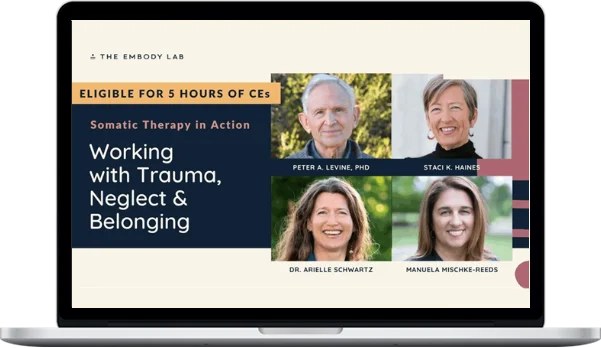
Peter Levine & Arielle Schwartz – Somatic Therapy in Action: Working with Trauma, Neglect & Belonging
This course offers an in-depth exploration of somatic therapy through four powerful demonstration sessions, each highlighting unique therapeutic journeys. Clients work through patterns of self-doubt, cultural trauma, childhood abandonment, and deep-seated fear using body-based techniques and mindful awareness. The sessions showcase the transformative power of somatic practices like movement, vocalization, imagery, and co-regulation in fostering emotional healing, self-connection, and empowerment. Together, they emphasize the importance of creating safe, supportive spaces where individuals can access inner resources, integrate their experiences, and reconnect with their authentic selves.
About the course
Somatic Journeys: Demonstrations in Healing Self-Doubt, Trauma, Abandonment, and Fear
True healing happens not when we think our way through pain, but when we feel our way home to ourselves through the body. This educational package offers an in-depth exploration of somatic therapy through four powerful demonstration sessions, each illuminating a unique therapeutic journey toward wholeness. Watch as clients work through patterns of self-doubt, cultural trauma, childhood abandonment, and deep-seated fear using body-based techniques that create lasting transformation.
The Body as Portal to Healing:
These sessions showcase the transformative power of somatic practices—movement, vocalization, imagery, and co-regulation—in fostering emotional healing, self-connection, and empowerment. More than technique demonstrations, these are intimate windows into how skilled practitioners create safe, supportive spaces where individuals can access inner resources, integrate fragmented experiences, and reconnect with their authentic selves. Each session reveals not just what to do, but how to be with clients as they navigate the tender terrain of their own healing.
What You’ll Learn In Somatic Therapy in Action: Working with Trauma, Neglect & Belonging
Through four comprehensive demonstration modules, you’ll discover how to:
Module 1: Using Mirroring and Validation to Create Safe Space with Staci K. Haines
Working with “Not Enough”:
- Address pattern of constantly seeking new information
- Work with feeling of never being/doing enough
- Connect client with body to access underlying emotions
- Facilitate release of tension through movement and vocalization
Somatic Accessing:
- Guide focus to present bodily sensations (tightness in throat, constriction in chest)
- Use physical sensations as primary way to access and understand “not enough” feeling
- Track how self-doubt lives in the body
- Support deeper connection through body awareness
Somatic Interventions:
- Invite physical embodiment of impulses (curling inward)
- Engage in collective vocalization (“stop”) to shift stuck energy
- Create sense of being accompanied in protective action
- Use group support to amplify individual expression
Working with Unconscious Wisdom:
- Reframe tendency to “run” from one learning experience to next
- Understand pattern as potentially wise, though now generalized, protective strategy
- Connect current behavior to past experiences
- Honor adaptive function while supporting transformation
Creating Safe Container:
- Use mirroring to reflect client’s experience
- Validate emotions and protective patterns
- Build supportive space for exploration and processing
- Support client in feeling safe enough to release control
Module 2: Releasing Trauma Through Movement and Imagery with Manuela Mischke-Reeds
Cultural and Political Trauma:
- Work with experiences from growing up in former Yugoslavia
- Address impact of cultural conflict on sense of self and belonging
- Navigate feeling unsafe and unwelcome in homeland
- Process collective trauma through individual body
Somatic Trauma Exploration:
- Connect with fear and anxiety held in body
- Notice and follow bodily sensations (fear, trembling)
- Facilitate expression of impulses (urge to run)
- Use imagery (protective shield) for processing and integration
Tracking Skills:
- Track participant’s verbal narrative and non-verbal cues
- Notice shifts in affect, breathing patterns, body language
- Inform interventions based on what’s observed
- Ensure therapeutic process remains congruent with participant’s experience
Working with Parts in Conflict:
- Address fighting protector part
- Support fearful part that wants to flee danger
- Release chronic tension patterns from unresolved conflict
- Integrate different parts of self
Movement and Imagery for Release:
- Facilitate trauma release through movement
- Use imagery to support processing
- Help participant reclaim connection to body
- Restore sense of belonging and safety
- Cultivate greater presence and well-being
Module 3: Releasing Feelings of Abandonment Through Somatic Techniques with Dr. Arielle Schwartz
Working with Early Trauma:
- Address deep-rooted feelings of abandonment and fear
- Process traumatic memories from early childhood
- Support emotional release and perspective shifts
- Work with fear of abandonment in present relationships
Integrating Top-Down and Bottom-Up:
- Explore desired beliefs (“I’m grounded, connected”)
- Attend to affect and bodily sensations (nausea, fear)
- Integrate cognitive and somatic interventions
- Facilitate trauma reprocessing through multiple channels
Co-Regulation Techniques:
- Use grounding gestures (hand on heart)
- Mirror body language to create safety
- Modulate voice tone for regulation
- Help participant orient to safety
- Manage overwhelming emotions during trauma exploration
Parts Work with Young Self:
- Facilitate differentiation from young, frightened part (“baby behind the couch”)
- Foster self-compassion through internal dialogue
- Ask what young part needs
- Encourage adult self to provide care and validation
- Support integration of younger parts
Creating Safe Space:
- Emphasize co-regulation throughout
- Build resources before accessing difficult material
- Guide gentle reprocessing of traumatic memories
- Support connection with authentic self
- Facilitate shifts in emotional regulation and self-awareness
Module 4: Using the Voo Exercise to Connect With Inner Knowing and Ancestral Support with Dr. Peter Levine
The Voo Exercise:
- Guide Voo vocalization technique
- Experience shifting and alchemizing of sensations
- Work with fear in lower stomach
- Track movement into heart and emergence of joy
- Address tears associated with “not enough” feeling
Initiating Somatic Exploration:
- Invite noticing of present bodily sensations (fear in stomach)
- Encourage detailed observation of location and qualities
- Track warmth, churning, and other sensations
- Follow the body’s natural movement of experience
Shifting Attention:
- Guide movement between different somatic experiences
- Work with sensation of fear in lower belly
- Connect with feeling of grace in upper belly
- Observe how each sensation changes
- Notice connection to different emotional states
Ancestral and Community Connection:
- Introduce concept of trauma healing within group context
- Share indigenous perspectives on collective healing
- Guide imagination of ancestors standing behind
- Evoke feelings of strength and improved posture
- Explore collective wellbeing versus individual isolation
Resource Building:
- Connect with community support
- Access ancestral support as resource
- Build sense of inner knowing
- Foster empowerment through connection
- Integrate practices into daily life
Core Competencies Developed Across All Modules:
Creating Safety:
- Use mirroring and validation
- Build co-regulation through presence
- Modulate voice and body language for safety
- Create containers strong enough for deep work
- Honor pacing and client’s readiness
Somatic Tracking:
- Notice and follow bodily sensations
- Track verbal and non-verbal cues simultaneously
- Observe shifts in breath, affect, posture
- Read the body’s messages
- Use somatic awareness as primary assessment
Body-Based Interventions:
- Movement and gesture to release stuck energy
- Vocalization (individual and collective)
- Imagery for processing and protection
- Breathwork for regulation
- Physical embodiment of impulses and feelings
Working with Parts:
- Identify conflicting internal parts
- Support dialogue between parts
- Integrate protective and vulnerable aspects
- Facilitate self-compassion for all parts
- Work with young parts needing care
Resource Building:
- Access internal resources (breath, body awareness, inner knowing)
- Utilize external resources (community, ancestors, nature)
- Build capacity before processing trauma
- Strengthen regulating pathways
- Support integration of resources into daily life
Trauma Processing:
- Work with cultural and political trauma
- Address childhood abandonment and fear
- Process stuck patterns and beliefs
- Support completion of defensive responses
- Facilitate integration and healing
Reframing Protection:
- Understand patterns as adaptive strategies
- Honor protective function of behaviors
- Work with rather than against protection
- Support transformation when ready
- Validate wisdom in seemingly problematic patterns
Expert Faculty:
Learn from master somatic practitioners: Staci K. Haines (Generative Somatics), Manuela Mischke-Reeds, Dr. Arielle Schwartz, and Dr. Peter Levine (Somatic Experiencing®)—each demonstrating unique approaches to body-based healing while honoring common somatic principles.
The Demonstration Advantage:
Witnessing real sessions with actual struggles reveals the art behind the science:
- How to create safety that allows vulnerability
- When to slow down versus when to support expression
- How to track multiple levels simultaneously
- The precise use of voice, gesture, and presence for co-regulation
- How to work with resistance as protection
- The moment when something shifts and releases
- How different practitioners bring their unique styles to common principles
Four Distinct Journeys, Universal Themes:
While each participant brings unique struggles, powerful patterns emerge:
- Self-doubt often manifests as “never enough” and constant seeking
- Cultural trauma lives in the body long after leaving the homeland
- Abandonment wounds affect present-day capacity for connection
- Deep-seated fear can be accessed and transformed through body
- All healing requires safe, supportive relational space
- Inner resources exist even in those who feel most depleted
- The body knows how to heal when given right conditions
- Ancestral and collective support can resource individual healing
Transformation Through Body Wisdom:
This package supports professionals in helping clients:
- Recognize how patterns of self-doubt live in the body
- Process cultural and collective trauma somatically
- Heal abandonment wounds through co-regulation
- Transform fear through vocalization and movement
- Access inner knowing beneath adaptive patterns
- Connect with ancestral support and wisdom
- Integrate fragmented experiences into wholeness
- Reclaim authentic self beneath protective strategies
- Build lasting capacity for self-connection and empowerment
Who This Is For:
Essential training for:
- Therapists learning somatic approaches
- Practitioners working with trauma survivors
- Clinicians addressing self-worth and “not enough” patterns
- Those working with immigrants and refugees
- Practitioners supporting clients with abandonment wounds
- Anyone interested in integrating cultural and ancestral healing
- Students of Somatic Experiencing®, Generative Somatics, or other body-based modalities
- Experienced practitioners wanting to refine their somatic skills
What Makes This Package Unique:
Four different presenting issues, four different practitioners, unified by somatic principles:
- Self-doubt and the never-ending search for “enough”
- Cultural trauma from war and displacement
- Early abandonment and its impact on adult relationships
- Deep fear and its transformation through ancestral connection
- You’ll witness the full therapeutic arc in each session—from initial presentation through accessing the body’s wisdom to integration and empowerment—all demonstrating that while our struggles may differ, the body’s path to healing follows similar principles.
The Healing Power of Safe Space:
At the heart of all four demonstrations is a profound truth: transformation requires safety. Not the absence of discomfort, but the presence of support. Watch how each practitioner creates conditions where clients feel safe enough to:
- Feel what has been held at bay
- Express what has been suppressed
- Connect with what has been exiled
- Release what no longer serves
- Reclaim what was always theirs
Core Somatic Principles in Action:
These demonstrations illuminate fundamental somatic truths:
- The body holds the story and the solution
- Protective patterns deserve appreciation before transformation
- Co-regulation precedes self-regulation
- Movement and sound facilitate release
- Present-moment sensation is more powerful than past narrative
- Collective and ancestral resources can support individual healing
- Integration happens through the body, not just the mind
- Safe relationship is the container for all healing
- Watch these master practitioners work with the profound intelligence of the body, and discover how creating safe, supportive therapeutic spaces allows clients to access their own inner resources, integrate their experiences, and reconnect with their authentic selves—not as an idea, but as a lived, embodied reality.
More courses from the same author: Peter Levine & Arielle Schwartz
Related products