

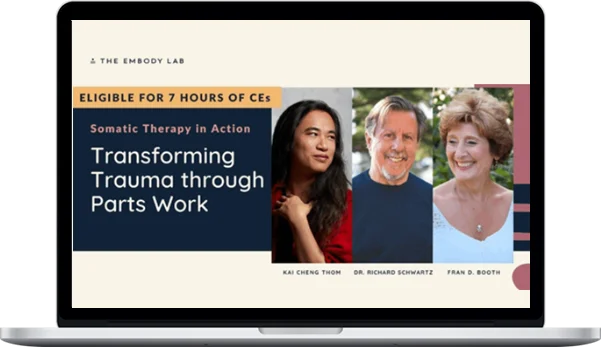
Richard Schwartz And Scott Lyons – Somatic Therapy in Action: Transforming Trauma through Parts Work
This course offers an exploration of Internal Family Systems (IFS) therapy, uniquely integrating it with somatic approaches to facilitate profound healing. Through six detailed demonstration sessions, participants will witness how to identify, understand, and work with various internal “parts” that contribute to complex emotional patterns like internalized anger, social anxiety, perfectionism, fear, and chronic physical pain. The modules showcase techniques for fostering self-compassion, unburdening inherited emotional pain, and transforming protective mechanisms that no longer serve, ultiMatély leading to greater integration and wholeness. These demonstrations come together to highlight the power of connecting with the “Self” to address deep-seated trauma and cultivate a more peaceful and authentic way of being.
About the course
Internal Family Systems Meets Soma: Demonstrations in Parts Work and Embodied Healing
We are not singular selves but complex internal systems—made up of parts that protect, parts that carry pain, parts that criticize, and beneath it all, a core Self with the capacity for compassion, curiosity, and healing. This comprehensive six-module demonstration package offers a profound exploration of Internal Family Systems (IFS) therapy uniquely integrated with somatic approaches, revealing how working with our multiplicity through the body can facilitate transformation that talk therapy alone cannot reach.
The Power of Parts Work:
Through six detailed demonstration sessions, witness how master IFS practitioners identify, understand, and work with various internal parts contributing to complex patterns: internalized anger and self-attack, social anxiety and perfectionism, protective “jailer” mechanisms, caregiving burdens rooted in childhood trauma, chronic migraines as the body’s “no,” and existential fear of dying. These demonstrations illuminate not just technique, but the artistry of facilitating internal dialogue, unburdening inherited pain, and accessing Self-energy—the core of inner wisdom and compassion that can heal even the most wounded parts.
What You’ll Learn In Somatic Therapy in Action: Transforming Trauma through Parts Work
Through six comprehensive demonstration modules, you’ll discover how to:
Module 1: From Self-Attacking to Forgiveness – A Somatic Demonstration on Healing Inner Conflict with Kai Cheng Thom
Understanding Internal Multiplicity:
- Work with patterns of internalized anger and self-attack
- Identify various parts (the attacker, wounded child, loving child)
- Understand roles and interconnectedness of different parts
- Recognize conflicting satisfactions in protective patterns
Creating Safe Container:
- Establish safe and collaborative therapeutic container
- Explicitly invite participant to identify session agreements
- Foster trust and agency before deeper processing
- Build foundation for vulnerable parts work
Somatic Exploration of Parts:
- Guide exploration of different parts through somatic inquiry and imagery
- Use body awareness to access parts
- Increase self-awareness through embodied parts work
- Understand protective functions of various internal states
Self-Compassion and Forgiveness:
- Support self-forgiveness for past patterns of self-attack
- Recognize protective intention behind attacking patterns
- Facilitate integration and dialogue between parts
- Attend to and validate emerging insights with non-judgmental presence
- Promote greater wholeness and self-compassion
Module 2: Working with Social Anxiety and Protector Parts with Dr. Richard Schwartz
Connecting with Self-Energy:
- Help participants connect with core Self—inner wisdom and compassion
- Work with social anxiety and perfectionism
- Understand parts that are terrified and enraged
- Access Self as resource for understanding parts
IFS Core Concepts:
- Utilize concept of “parts” within Internal Family Systems model
- Identify distinct parts and their roles
- Explore protective functions of different parts
- Understand internal system dynamics
Creating Safety for Parts Work:
- Establish safe therapeutic environment through explicit agreements
- Guide participants to place interfering parts in “waiting room”
- Foster sense of control and security
- Build capacity for deeper exploration
Eliciting Self-Energy:
- Ask “How do you feel toward this part?”
- Cultivate curiosity and compassion toward parts
- Gently guide separation from parts expressing fear or judgment
- Support unburdening of inherited emotional pain
- Transform protective mechanisms that no longer serve
- Facilitate internal connection, healing, and transformation
Module 3: Working with Protector Parts in IFS with Fran Booth
The Protector-First Principle:
- Understand importance of working with protectors before vulnerable parts
- Establish safety through befriending protection
- Work with “jailer” part activated when others prioritize their needs
- Build trust through honoring protective function
Addressing Protector Concerns:
- Identify concerns by asking for objections
- Validate protective parts’ roles within system
- Use reflective listening to understand protector perspective
- Work with mindful dialogue and somatic awareness
Building Self-to-Part Relationship:
- Build Self-energy toward protective parts through curiosity, compassion, acknowledgement
- Facilitate unblending (separation of Self from part)
- Create safety for deeper work with vulnerable parts
- Use somatic inquiry to access and process emotions and bodily sensations
Module 4: Unblending Caregiving Burdens from Trauma with Fran Booth
Complex Caregiving Dynamics:
- Work with conflicting feelings about caring for aging parent
- Address obligation, overwhelm, and resentment
- Connect current struggles to childhood trauma
- Understand parts in conflict with one another
Identifying Parts in Conflict:
- Recognize protesting part protecting hard-won recovery
- Understand guilty part carrying responsibility
- Explore parts protecting joy and beauty after life of struggle
- Work with tension between caregiving and self-care
Legacy Burdens:
- Explore connection to potential ancestral energy
- Begin legacy unburdening protocol from IFS perspective
- Listen to somatic signals (tension in chest)
- Explore positive intent of protesting part
Honoring Internal Boundaries:
- Honor internal “no” signals as boundaries
- Navigate complexity of participant’s system
- Understand function of protector parts in managing internal tension
- Protect personal recovery and joy while addressing familial obligations
Module 5: Working with a Body Saying No in the Form of Migraines with Fran Booth
Physical Symptoms as Parts:
- Work with frequent migraines linked to childhood trauma (abuse, neglect)
- Identify internal parts related to migraines
- Understand embodied trauma response
- Connect physical symptoms to parts carrying burdens
Creating Connection with Parts:
- Offer heartfelt apology to part activating migraine
- Listen to part’s story of needing to be strong
- Discover underlying sweetness despite feeling unseen
- Create internal space for parts to be heard
The Unburdening Process:
- Facilitate unburdening of significant pain held by part
- Use imagery and metaphor in unburdening
- Witness replacement of pain with peace and light
- Support client’s internal wisdom in transformation
- Maintain therapeutic presence throughout
Somatic IFS Integration:
- Build self-to-part connection through somatic awareness
- Track how beliefs are held in the body
- Use embodied techniques alongside IFS protocol
- Trust body’s wisdom in the unburdening process
Module 6: Unburdening a Scared Younger Part Holding Fear of Dying with Fran Booth
Working with Existential Fear:
- Explore escalating fear of dying
- Identify cluster of connected internal parts around fear
- Trace fear to young part that felt unsafe and alone
- Understand childhood experiences of not being met or reassured
Connecting with Vulnerable Young Parts:
- Connect with vulnerable young part carrying fear
- Validate experience of aloneness and fear
- Offer comfort, felt safety, and embodied holding
- Provide what was needed but not received in childhood
Embodied Self-Energy:
- Demonstrate offering embodied comfort and holding
- Facilitate release of burden related to not feeling truly alive
- Support receiving of embodied Self-energy
- Transform experience into feeling sacred, radiant, full of light
The Therapeutic Arc:
- Track shift from initial presentation of fear
- Uncover and work with young part’s core experience
- Facilitate transformation through receiving what was needed
- Witness emergence of radiance and aliveness
- Observe how Self-energy transforms parts
Core Competencies Developed Across All Modules:
IFS Fundamentals:
- Understand internal multiplicity and parts
- Recognize protector parts vs. vulnerable exiles
- Access Self-energy and its healing qualities
- Navigate the internal system with respect
Self-Energy Qualities:
- Cultivate curiosity toward parts
- Develop compassion for protective patterns
- Build clarity about parts’ roles and burdens
- Access calm presence even with activated parts
- Connect with confidence in Self’s healing capacity
- Foster courage to approach wounded parts
Working with Protectors:
- Always befriend protectors before accessing exiles
- Ask for permission and address objections
- Validate protective function even when problematic
- Understand positive intent behind seemingly negative behaviors
- Support unblending of Self from protector parts
The Unburdening Process:
- Identify what parts are carrying (beliefs, emotions, sensations)
- Witness the part’s story and burden
- Facilitate release of what no longer serves
- Support integration of new qualities (peace, light, freedom)
- Track somatic shifts throughout unburdening
Somatic Integration:
- Use body awareness to access and work with parts
- Track somatic signals and what they reveal about parts
- Offer embodied holding and comfort to young parts
- Notice physical symptoms as parts’ communication
- Support embodied transformation, not just cognitive insight
Legacy Burdens:
- Recognize inherited trauma and ancestral pain
- Understand how family patterns live in our parts
- Begin legacy unburdening work
- Honor complexity of intergenerational transmission
Creating Safety:
- Establish explicit agreements for session
- Use “waiting room” technique for interfering parts
- Honor internal “no” and boundaries
- Build trust through pacing and permission
- Create conditions where parts feel safe to emerge
Expert Faculty:
- Learn from IFS pioneers and master practitioners: Kai Cheng Thom, Dr. Richard Schwartz (creator of Internal Family Systems), and Fran Booth (with four powerful demonstrations)—each bringing deep expertise in integrating IFS with somatic approaches.
The Demonstration Advantage:
Watching real IFS sessions reveals what training manuals cannot teach:
- How to track when Self-energy is present vs. when a part has blended
- The precise language that helps parts feel heard
- How to navigate objections from protective parts
- The moment when a part softens and trusts
- How unburdening actually unfolds in real time
- The art of working with multiple parts simultaneously
- How somatic awareness deepens and accelerates IFS work
Why Somatic Integration Matters:
Traditional IFS can happen through visualization and internal dialogue alone, but adding somatic awareness:
- Provides more direct access to parts held in the body
- Makes unburdening more complete and lasting
- Helps clients feel the transformation, not just think about it
- Offers young parts the embodied holding they needed
- Allows physical symptoms to reveal their part-based origins
- Creates visceral experiences of Self-energy, not just concepts
Common Threads Across Demonstrations:
While each session addresses different struggles, powerful principles emerge:
- Self-energy has innate capacity to heal parts
- Protectors must be befriended before accessing vulnerable parts
- Parts carry burdens that aren’t originally theirs
- Young parts need embodied experiences, not just words
- Physical symptoms often represent parts saying “no”
- Legacy burdens connect us to ancestral pain
- Unburdening creates space for new qualities to emerge
- The body holds keys to accessing and transforming parts
Transformation Through Parts Work:
This package supports professionals in helping clients:
- Understand internal conflict as parts in dialogue
- Befriend rather than fight protective patterns
- Access Self-energy for healing wounded parts
- Unburden pain carried from childhood and ancestors
- Transform physical symptoms rooted in parts
- Integrate multiplicity into greater wholeness
- Develop self-compassion for all parts of themselves
- Live from Self rather than from protective parts
Who This Is For:
Essential training for:
- Therapists learning or practicing IFS
- Somatic practitioners wanting to integrate parts work
- Clinicians working with complex trauma
- Practitioners addressing physical symptoms with emotional roots
- Anyone working with self-criticism, anxiety, or perfectionism
- Therapists interested in legacy burdens and ancestral healing
- Students of IFS seeking to see the model in action
- Experienced IFS practitioners wanting to deepen somatic integration
What Makes This Package Unique:
Six demonstrations with real clients working with real struggles:
- Self-attack and internalized anger
- Social anxiety and perfectionism
- Protective “jailer” mechanisms in relationships
- Caregiving burdens rooted in childhood trauma
- Chronic migraines as body’s communication
- Existential fear traced to unmet childhood needs
- You’ll witness the full arc from identifying parts to unburdening, from protector work to accessing vulnerable exiles, from suffering to transformation—all through the integration of IFS and somatic awareness.
The Healing Power of Self:
At the core of IFS is a revolutionary understanding: beneath our protective parts and wounded exiles lies an undamaged Self with innate qualities of compassion, curiosity, clarity, calm, confidence, courage, creativity, and connectedness. This Self doesn’t need to be created or earned—it simply needs to be accessed. These demonstrations reveal how connecting parts with Self-energy facilitates healing that feels almost miraculous, yet is simply the natural result of our internal system operating as it was designed to.
Watch these masters work with the internal multiplicity that lives within us all, and discover how befriending our parts—rather than fighting them—opens pathways to integration, wholeness, and the profound peace of living from Self.
More courses from the same author: Richard Schwartz And Scott Lyons
Related products