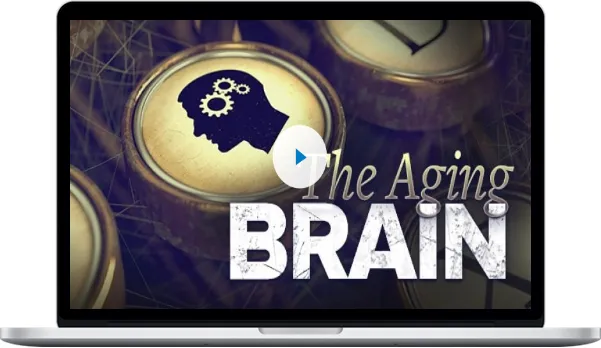
Thad Polk – The Aging Brain
$9.00
»Delivery: Within 24hs
Description
Thad Polk – The Aging Brain
The Aging Brain
A neuroscientist and award-winning professor takes you down to the molecular level of the brain to show you what you can do to prolong your health and keep your mind sharp.
LECTURE (12)
01:The Aging Mind: What Changes?
Aging affects us all, and it’s important to know how our cognitive functions change over our lives. The course opens with an examination of how fluid processing skills-such as episodic and working memory-tend to decline over time, whereas crystallized intelligence (how-to skills and accumulated knowledge) remains stable or even improves.
02:Why Don’t We Live Forever?
Take a look at how our genes influence the aging process. Professor Polk explores several theories for why we age and eventually die, then delves into the genetic mechanisms involved in aging. Find out how replication damages cells and why there is a limit to the number of healthy replications our cells can make.
03:Is Aging a Disease?
Scientists debate whether aging is actually a disease, but the effects of aging indisputably resemble the symptoms of a disease. Here, examine three major mechanisms behind these effects: energy consumption, free radicals, and damage to our DNA. Then consider whether there could be a way to “cure” these effects.
04:Aging and Brain Structure
See how the cognitive changes of aging relate to the biological changes discussed in the previous lectures. It turns out that regions of the brain associated with processing speed, executive function, and episodic memory are more susceptible to aging, which may explain why these cognitive functions are particularly susceptible to decline. Tour the anatomy of the brain and see age-related differenc…
05:Aging and Brain Function
Turn from the brain’s structure to its activity. After reviewing how we study brain function via fMRI, Professor Polk shows you how brain activity changes as we age-and how these changes impact our memory, our ability to multitask, and more. Then, learn some good news about how the brain compensates for these changes.
06:Emotional Aging
Many studies agree that people older than 65 typically experience a greater sense of emotional well-being than younger people. See what scientific research shows about our evolving emotional landscape, and why older people tend to be happier than the young. Depression can still be a problem for older adults, though-consider the most common causes, discover how symptoms may differ from those of you…
07:Strategies for an Aging Memory
How does memory work? Can aspects of it be improved? This eye-opening lecture offers a test of two different strategies for memorization: sheer repetition on the one hand, and visual-spatial storytelling on the other. Once you understand how memory works, you’ll investigate four key principles that you can apply to improve your own memory.
08:Dementia and Alzheimer’s Disease
Find out what medical scientists mean by “dementia,” which results from disease and is not a normal part of healthy aging. The most prominent disease that causes dementia is Alzheimer’s, so Professor Polk walks you through its history, symptoms, and palliative treatments, as well as the current state of Alzheimer’s research.
09:Parkinson’s Disease and Stroke
Continue your study of age-related brain diseases with an investigation of Parkinson’s disease and stroke. What are they? How do they affect a person’s behavior? And can they be treated? Examinations of these questions and more take you through neurochemistry, stem cell research, and strategies you can use to reduce your risk.
10:Aging Well: Staying Active
Get ready for good news to help stave off mental decline! Here, you’ll analyze the effects of physical, social, and mental activity on the aging brain. Ample evidence from communities with longer-than-average lifespans shows that getting plenty of exercise and maintaining a vibrant social life can help keep the mind sharp and the spirit young.
11:Aging Well: Diet and Stress
Shift your attention from the effects of physical and social activity to the impact of diet and stress. Explore the benefits of eating a diet rich in fruits, vegetables, and omega-3 fatty acids and low in processed foods-like the Mediterranean, DASH, and MIND diets. Then, delve into the physiological effects of stress, trace the damage it creates throughout the body, and learn how to reduce stress…
12:The Science of Immortality
Is it possible to live forever? Would we even want to? Conclude the course with a look at cutting-edge research involving gene therapy and stem cells that may help us mitigate or even “cure” the effects of aging. The science is still emerging, but the possibilities are fascinating.
DETAILS
Overview
Delve into the latest neuroscientific research with 12 fascinating lectures that give you a deep understanding of what happens to the brain over time. Cutting-edge science comes to life as you go down to the cellular level of the brain to discover why certain brain functions decline-and which functions stay stable or even improve-and learn what you can do to prolong your health and keep your mind sharp.
About Thad Polk
“Every aspect of our mental life is controlled by the brain. So if we ever hope to understand the human mind, and how it’s affected by aging, by disease, and by drugs, then we need to develop a better understanding of the brain and the neural mechanisms that underlie cognition.”
ALMA MATER Carnegie Mellon University
INSTITUTION University of Michigan
Professor Thad Polk is an Arthur F. Thurnau Professor in the Department of Psychology and the Department of Electrical Engineering and Computer Science at the University of Michigan. He received a B.A. in Mathematics from the University of Virginia and an interdisciplinary Ph.D. in Computer Science and Psychology from Carnegie Mellon University. Thad Polk also received postdoctoral training in cognitive neuroscience at the University of Pennsylvania.
Professor Polk’s research combines functional imaging of the human brain with computational modeling and behavioral methods to investigate the neural architecture underlying cognition. Some of his major projects have investigated differences in the brains of smokers who quit compared with those who do not, changes in the brain as we age, and contributions of nature versus nurture to neural organization. Professor Polk regularly collaborates with scientists at the University of Texas at Dallas and at the Max Planck Institute for Human Development in Berlin, where he is a frequent visiting scientist.
Professor Polk regularly teaches on topics ranging from the human mind and brain, to cognitive psychology, to computational modeling of cognition. His teaching at the University of Michigan has been recognized by numerous awards, and he was named to The Princeton Review’s list of the Best 300 Professors in the United States.
More courses from the same author: Thad Polk
Delivery Policy
When will I receive my course?
You will receive a link to download your course immediately or within 1 to 21 days. It depends on the product you buy, so please read the short description of the product carefully before making a purchase.
How is my course delivered?
We share courses through Google Drive, so once your order is complete, you'll receive an invitation to view the course in your email.
To avoid any delay in delivery, please provide a Google mail and enter your email address correctly in the Checkout Page.
In case you submit a wrong email address, please contact us to resend the course to the correct email.
How do I check status of my order?
Please log in to HealthcareCourse account then go to Order Page. You will find all your orders includes number, date, status and total price.
If the status is Processing: Your course is being uploaded. Please be patient and wait for us to complete your order. If your order has multiple courses and one of them has not been updated with the download link, the status of the order is also Processing.
If the status is Completed: Your course is ready for immediate download. Click "VIEW" to view details and download the course.
Where can I find my course?
Once your order is complete, a link to download the course will automatically be sent to your email.
You can also get the download link by logging into your HealthcareCourse account then going to Downloads Page.